ARTICLES
www.artindia.net
does not take any responsibility whatsoever
with regard to articles/ reviews/ previews /information published here.
Any suggestions/ comments /complaints etc. may be sent directly to the
writers/ contributors directly. We invite
you to contribute articles/ reviews etc. to ArtScape. You may sent in
your stories to art.india@yahoo.com along with scanned pictures.


GS RAJAN is a music composer, classical flautist and an arts administrartor. A product of Rukmini Devi Arundale's Kalakshetra, he is a disciple of MD Ramanathan in vocal music and H Ramachandra Shastri in Flute.
A former Deputy Secretary of the National Academy of Music, Dance and Drama (SNA) of the Government of India, Rajan continues to be the festival director of many International festivals.
Ruling from Justice AK Sikri
by GS RAJAN
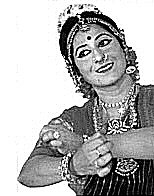
Some sections of the print media reported that the petition filed by the 60-year old Bharata Natyam dancer, Komala Varadan asserting that her name should be under the performing artists' category and not under lecture-demonstration category of the Indian Council for Cultural Relations was rejected by Justice AK Sikri. The ruling pointed out that the rule of the organization being challenged does not allow a dancer above 45 years of age to give performances.
This ruling might have the made the officials of the ICCR, a Government sponsored organization under the Ministry for External affairs, happy since this organization is responsible for sending musicians and dancers to various countries to strengthen cultural relations. (Has the ICCR been strictly adhering to this rule?) However this judgement will indeed spark-off a strong opposition among the classical dancers in India.
There are two sides to this rule. It is different when old dancers perform in India because the audience knows the mythological stories they enact and appreciate the nuances and bhakti rasa which a dancer is able to portray after years of experience and maturity. However these aspects are not relevant at all when they dance abroad. How can they know Tamil padams or Surdas bhajans? It is perfect body and movements that matter for audiences abroad.
Exponent of Bharata Natyam Geeta Chandran points out: "It is body that matters for dancers and audiences abroad, and not the mind. I have seen Leela Samson and Alarmel Valli at their best after 45". Instead of not sending old dancers abroad we should make foreign audiences understand the Indian context. This issue needs to be debated.
Shanta Sarbjeet Singh, senior dance critic and committee member of the Sangeet Natak Akademi remarks: Dancers who are near being senior citizens should diversify into full time gurus using their great experience and knowledge towards the young and the new generation. They can do reserch work in many hidden areas of the classical arts. I applaud the judgement of Justice Sikri in the context of it being focussed on presenting classical dance abroad.
Senior most dance critic Subbudu says 'Natya Shastra prescribes very rigid standards for a dancer's personality. They are more strict than international basic standard. Age certainly has an adverse effect on dancers, both female and male. As the ICCR and the court have correctly said, those dancers above the age of 45 can give lecture-demonstrations instead of solo dance performances. Otherwise dancers with disappropriate bodies would invite demostrations outside the auditorium'.
There is another angle to this issue that needs to be looked into. Supposing the dancer retires after the age of 45, will the Government take care of their expenses? While India boasts of its cultural heritage, it is a fact that the country does not have a clear-cut cultural policy. Such issues will crop up till the Ministry of Culture formulates the much-needed cultural policy.
If the Sangeet Natak Akademi has the authority to decide whether an art form is classical or not (recently SNA announced that Sattriya of Assam will henceforth be a classical dance form), why should not this so-called apex body draft a cultural policy for the nation? Perhaps they are busy organizing festivals to celebrate the golden jubilee.
Can the Zonal Cultural Centres do something? No. Because IAS officers head them who might not even know the difference between Bharata Natyam and Kuchipudi.
There is no hope even if the Government makes a committee to look into
this matter. After spending so much money on the high-powered Haksar Committee,
which looked into the functioning of Government sponsored cultural bodies,
no one bothered to implement the recommendations made by the Haksar Committee.
It is time that the dancers who refuse to retire even after 60 realize the harm they are doing to the art form and to themselves. They should instead promote themselves to gurus, experts and researchers and contibute to the development of classical arts. They can start dance companies and present choreographic works, conduct lecture-demonstrations, guide the young and be happy.
However only time will tell whether rules or rulings will be implemented or not by Government cultural bodies. As long as the term 'exceptional' exists in the Government of India, even a 70-year-old dancer might find a place in international dance festivals representing India. Since some of the leading dancers have polititian boyfriends; officials will be happy to process the file saying: 'may be considered as an exceptional case'. Like they say: Rules are for fools.
© Art India Net. ® 1998--2007. We welcome your suggestions and comments to improve this site. Please post an e-mail to add information.
Founder/ Content Editor/ Site Construction/ Maintenance: GS Rajan, Technical Advisor: Sudhir Gandotra Hosted by Communicators - Indserve Infotech P Ltd. © ®